
Blog
Oxidised Jewellery with Kurti Sets: An Easy Pairing Guide
How to pair oxidised jhumkas, chandbalis, chokers and bangles with kurti sets for office, festive and casual looks, plus simple care tips.

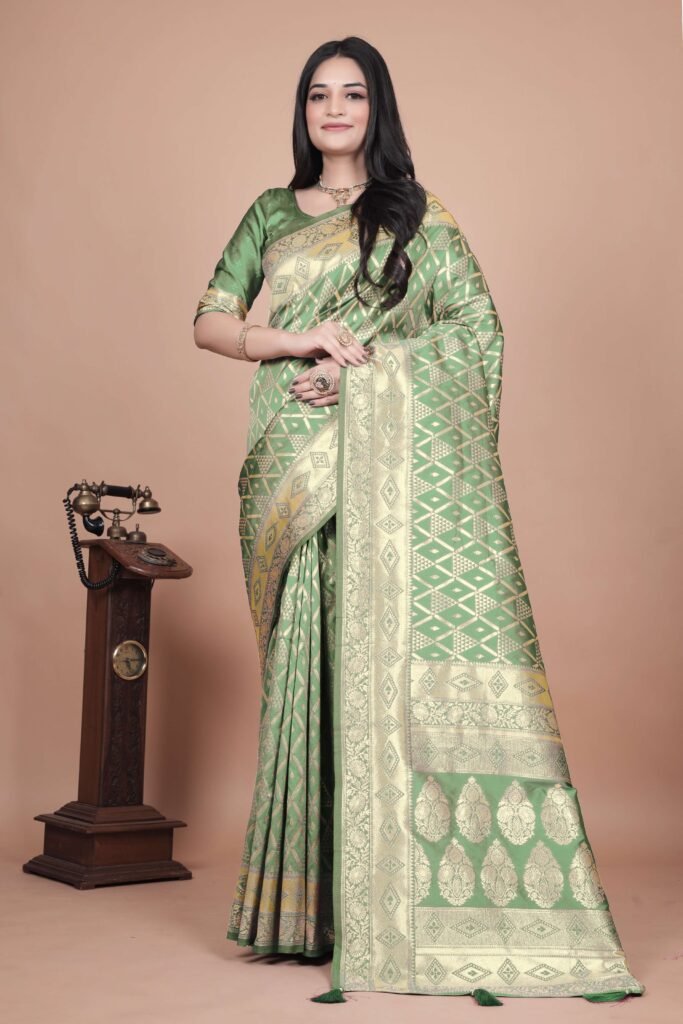
The saree is one of the most graceful outfits in the world, and one of the most intimidating the first time you try it. The good news is that learning how to drape a saree is mostly preparation and a handful of repeatable steps.
This guide walks you through the classic Nivi drape, then covers other popular drapes, the kinds of saree that suit different occasions, and a few care tips. It is written for beginners in India and for anyone in the USA or elsewhere wearing a saree for a wedding, festival or family occasion.
Gather everything first so you are not hunting for a pin halfway through.
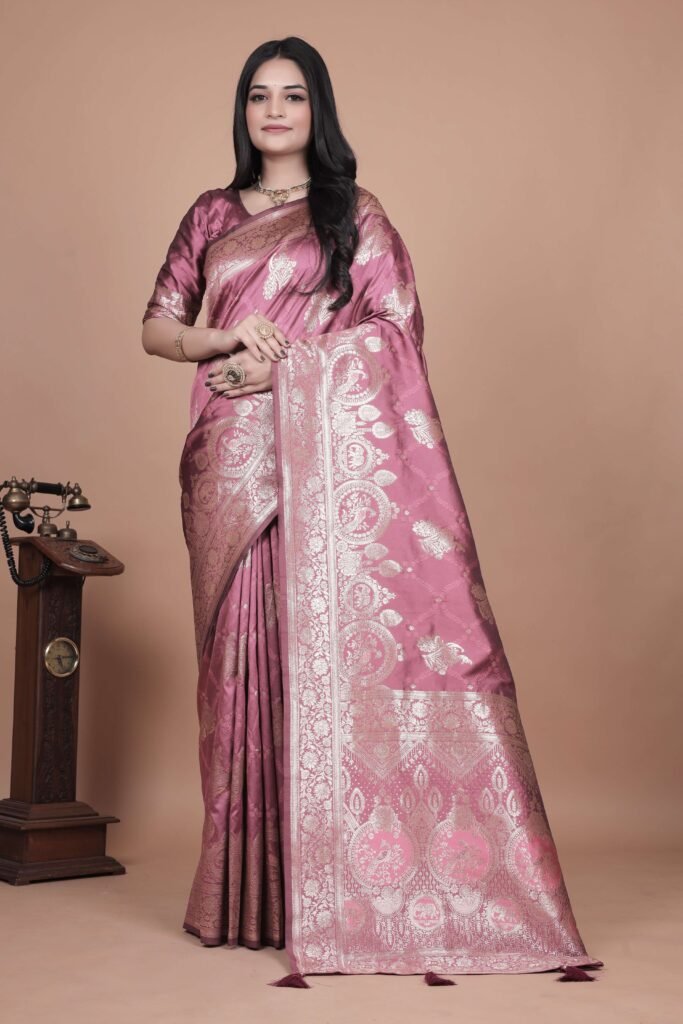
PRODUCT SPOTLIGHT
Rose Pink Banarasi Silk Saree with Silver Zari
Rose pink Banarasi silk with silver zari and floral and paisley motifs, per the listing title. Pick a petticoat close to the saree shade.
The Nivi drape is the most widely worn style across India and the one most people learn first. Read the steps through once before you start.
Dress in your blouse and petticoat, tie the petticoat securely, and put on your footwear. Stand in front of the mirror.
Hold the plain end, without the heavy border or decoration, with the inside facing you. Tuck the top edge into the petticoat just right of your navel, about two or three inches deep. The hem should just graze the floor.
Take the saree across your front to the left, round your back and back to the front, tucking the top edge in as you go. Keep the tuck an even depth. Stop when you are back near your navel.
The pallu is the decorative end. Take the remaining fabric around your back once more, under your right arm and up across your chest to your left shoulder. Let it fall behind you to about knee length.
Setting the pallu first means the pleats use whatever fabric is left, and it stops the pallu ending up too short. Hold it with one temporary pin.
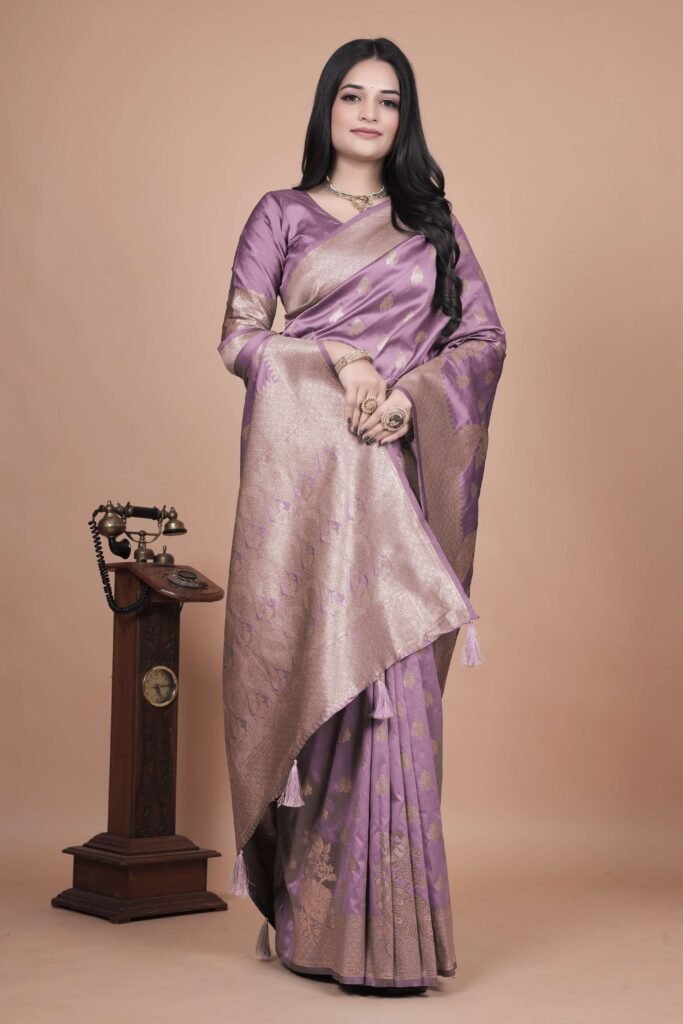
PRODUCT SPOTLIGHT
Lavender Banarasi Silk Saree with Golden Zari & Peacock Motifs
Golden zari peacock motifs and a richly woven pallu, per the listing. A pallu like this is worth showing off.
Gather the loose fabric hanging at the front. Fold five to seven equal pleats, each about four to five inches wide, with the top edges together and the hems level. Pin the pleats together from the inside so the pin does not show.
Tuck the pleated fabric into the petticoat at the navel, with the folds facing left. The pleats should fall straight down like a fan.
Spread or pleat the pallu as you like, and pin it to the blouse at the left shoulder from underneath so the pin stays hidden. A pallu pinned from below is far more secure than one resting on the shoulder.
Smooth the fabric across your front, check the hem length, and pin at the waist behind your left hip for extra security. Turn and look at the side and back. Walk, sit and raise your arms to check everything stays in place.
Once you are comfortable with Nivi, these variations build on the same skills of tucking, pleating and pinning.
The drape is half the story. The fabric decides how the saree falls, how formal it feels and how comfortable it is.
| Occasion | Saree type | Why it works | Drape tip |
|---|---|---|---|
| Weddings and receptions | Banarasi and other silks | Rich zari weaving and a formal look | Even pleats and a pinned pallu |
| Festivals and parties | Lighter silks, georgette, chiffon | Moves beautifully | Pin more carefully and use a firm petticoat |
| Daytime and summer | Cotton and cotton-silk | Breathable and holds pleats | Good choice for first drapes |
| South Indian weddings | Kanjivaram silk | A regional favourite | Ask what is traditional for the family |
| Gujarat and Rajasthan celebrations | Bandhani and Patola | Regional classics | Try the Gujarati drape |
Banarasi silk is a classic for weddings, receptions and religious ceremonies, with woven zari work that gives it a rich look. The Gopi silk saree collection includes many Banarasi silk sarees in mint green, lavender, rose pink and emerald.
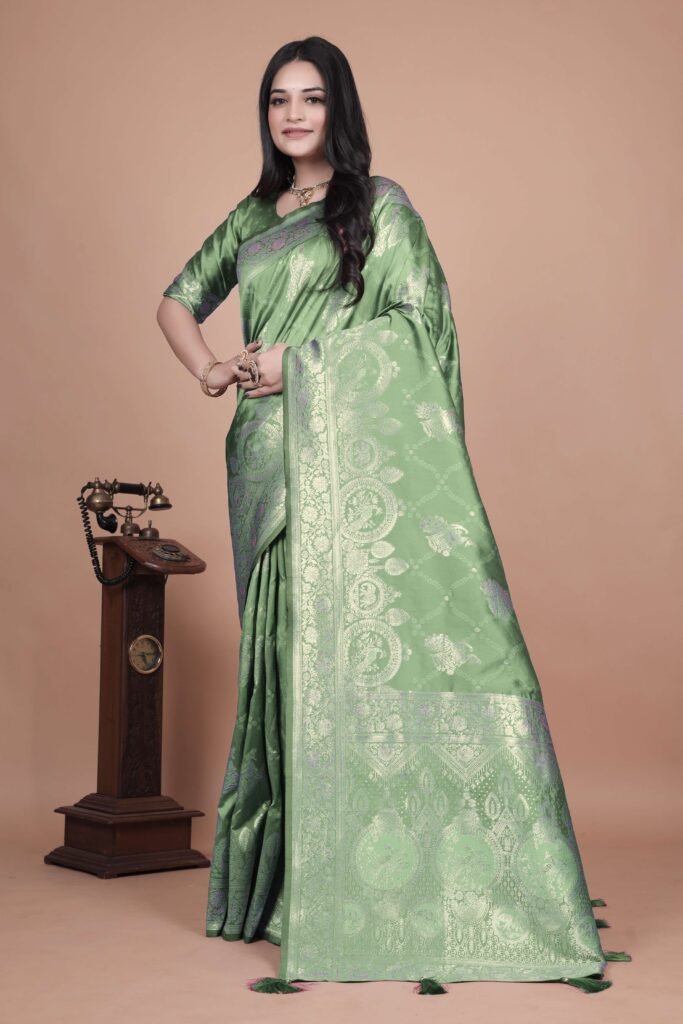
Mint Green Banarasi Silk Saree with Golden Zari
Golden zari floral and vine motifs, an ornate pallu and a matching unstitched blouse, per the listing.
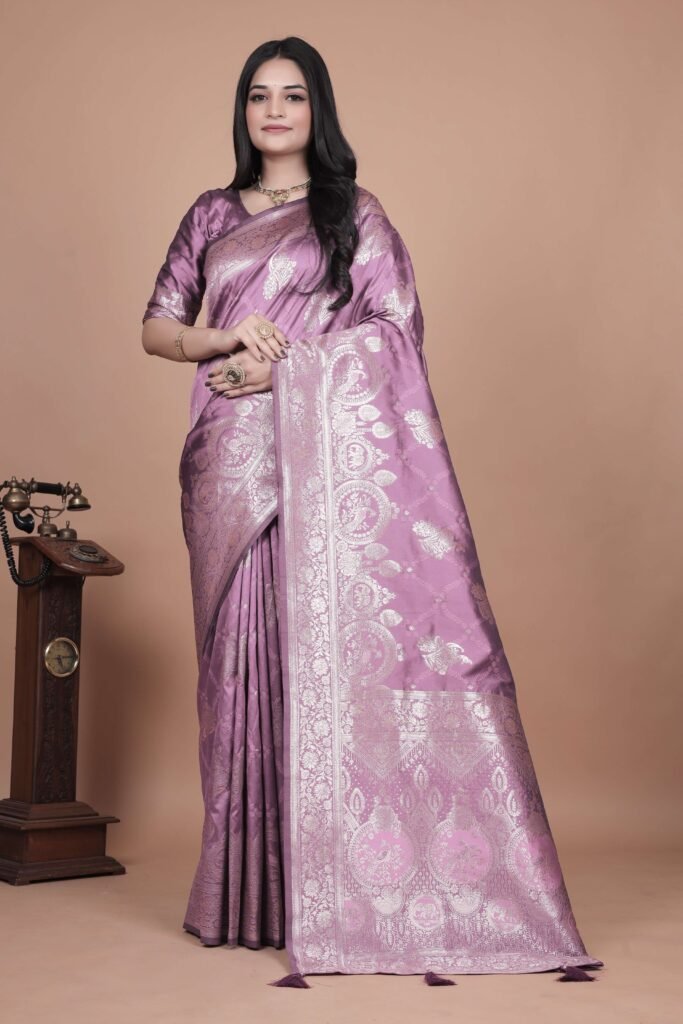
Lavender Banarasi Silk Saree with Silver Zari
Silver zari floral and paisley motifs with a matching blouse piece, per the listing.
Two more from the collection: the Lavender Banarasi Silk Saree with Golden Zari and Peacock Motifs has peacock motifs and leaf butis across the body. The Emerald Green Banarasi Silk Saree with Silver Zari has geometric motifs and a floral pallu.
Heavier silk holds pleats well, which can make it friendly for beginners, but it can feel heavy if you will dance for hours. Check each listing for fabric and blouse-piece details.
For Diwali parties and family functions, lighter silks, georgette and chiffon move beautifully, but they can be slippery, so pin carefully. Cotton and cotton-silk are breathable for daytime and hot weather, and they hold crisp pleats.
Kanjivaram silk is a favourite at South Indian weddings, Chanderi is popular for light daytime elegance, and Bandhani and Patola sarees are loved in Gujarat and Rajasthan. If you are attending a wedding in a particular community, ask what is traditional for that family.
If your saree comes with an unstitched blouse piece, give your tailor plenty of time and do a trial fitting. A contrast blouse lifts a simple saree, while a matching blouse looks classic.
Let the saree lead on jewellery. A richly woven Banarasi needs only light earrings and bangles, while a plain saree can carry a statement necklace.
PRODUCT SPOTLIGHT
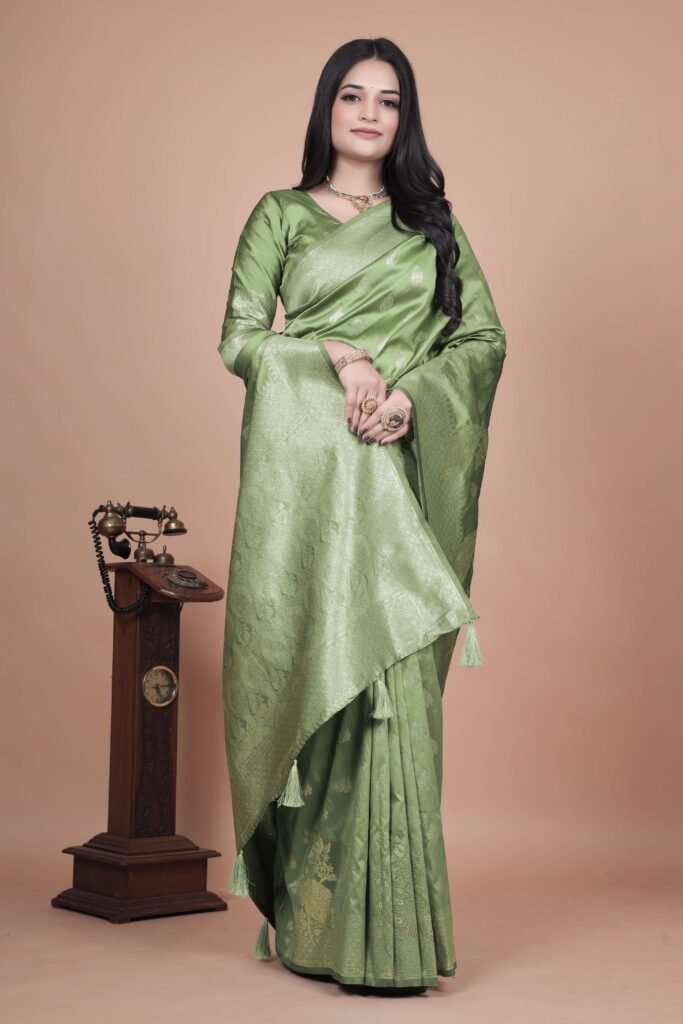
Lime Green Banarasi Silk Saree with Golden Zari & Peacock Motifs
Golden zari peacock motifs on lime green Banarasi silk, listed for weddings and festive wear.
Most beginners manage a decent Nivi drape after a few practice attempts. A snug petticoat and safety pins make the first tries much easier.
Cotton and cotton-silk sarees are usually easiest because they hold pleats and do not slip. Very silky chiffon and georgette take a little more practice.
Five to seven pleats of about four to five inches each is the usual starting point. Adjust to your height and the thickness of the fabric.
Yes. A petticoat holds the saree at your waist and gives the pleats something to tuck into. Choose a snug cotton one close to your saree’s colour.
You wear a fitted blouse and a petticoat. Some people also wear shapewear for a smoother line, which is a matter of personal preference.
Yes. A saree is a popular and respectful choice. Pick a bright, festive colour and avoid a full bridal red look.
Pin the pleats together from the inside before you tuck them, and tuck them firmly at the navel. A pin at the waist behind the hip adds extra security.

How to pair oxidised jhumkas, chandbalis, chokers and bangles with kurti sets for office, festive and casual looks, plus simple care tips.
A practical guide to styling a lehenga for weddings, festivals and family functions, with colour, dupatta, blouse, jewellery and budget tips.

Outfit ideas by event, colours to wear and avoid, and etiquette tips for American and NRI guests at an Indian wedding.